
How Does an HVAC Contractor Work?

Ever wondered, “How does an HVAC contactor work?” When your air conditioner won’t start or your HVAC system seems unresponsive, this small electrical part is often the culprit. The contactor acts like the system’s on-off switch—sending power to the compressor and fan whenever your thermostat calls for heating or cooling.
At A.J. Perri, we know a faulty contactor can bring your entire HVAC system to a halt. This guide explains what a contactor does, how it works, and how to recognize when it’s gone bad—plus why a professional should always handle repairs.
If your system doesn't power on, don’t take chances. Call 732-733-2541 for reliable HVAC repairs that will restore your system.
What Is a Contactor in HVAC Systems?
A contactor is a small electrical part found in most central air conditioners and heat pumps, and in some furnaces. Usually located in the outdoor unit, it’s a rectangular or square component made of metal and durable plastic housing, containing internal contacts that open and close to control power.
The contactor HVAC definition is simply this: It’s the switch that connects your HVAC system to its power source. When it’s in good shape, your equipment can start and stop as intended. When it wears out or sticks, your system may fail to turn on—or it may stay on too long.
Though it’s only a few inches wide, the contactor is one of the most important components in maintaining reliable, safe electrical flow in your system.
How Does an HVAC Contactor Work?
So, how does a contactor work for HVAC? When your thermostat detects that your home needs heating or cooling, it sends a low-voltage signal to the contactor. This activates an internal coil that pulls the contact points together—completing the electrical circuit and allowing power to flow to the compressor and fan motor.
Once your thermostat reaches the desired temperature, the signal stops, the coil releases, and the contact points open again. This breaks the circuit and cuts power, halting the system until it’s needed once more.
It’s a simple process that happens automatically every time your HVAC system turns on or off, but without a working contactor, nothing would run at all.
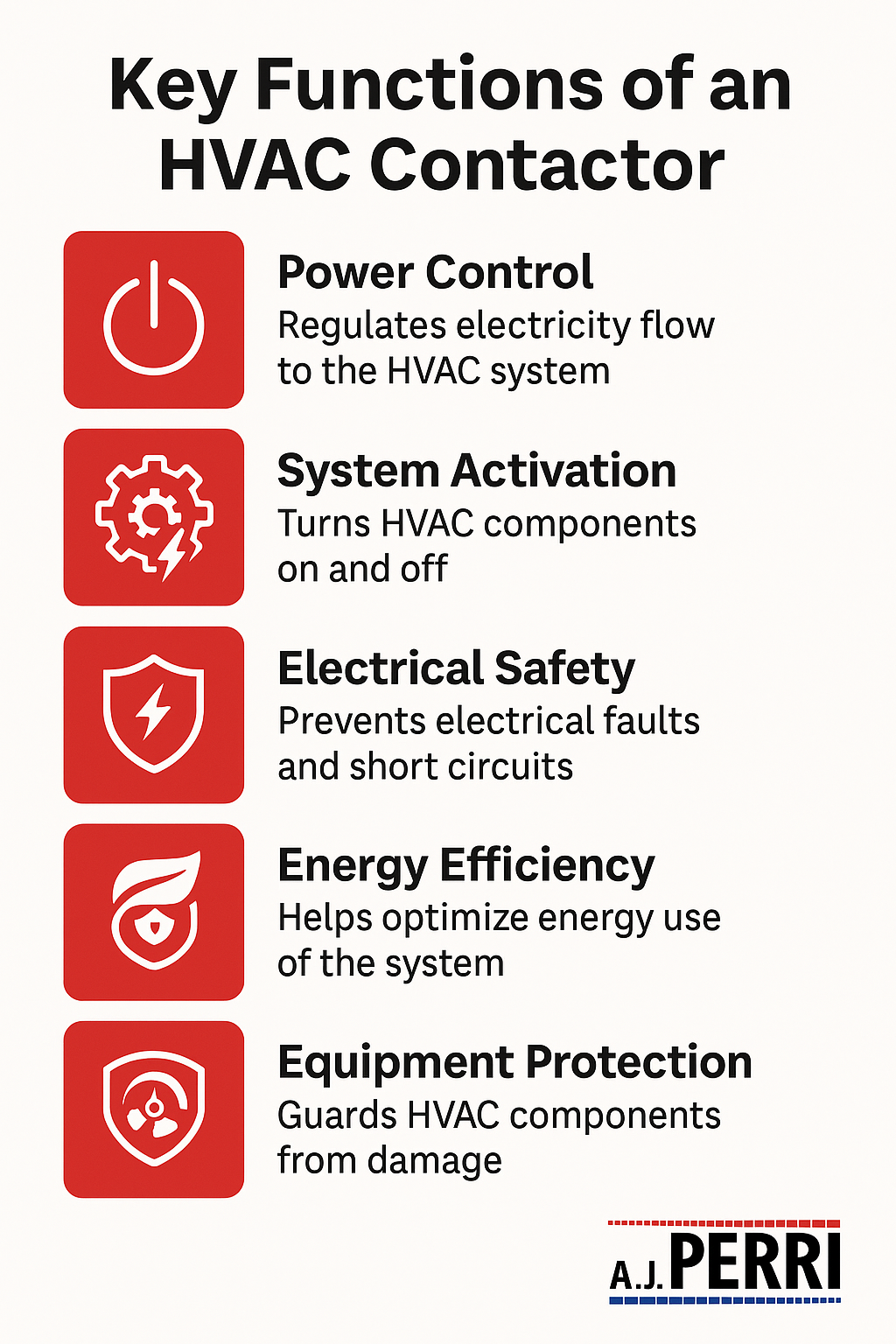
Key Functions of an HVAC Contactor
Now that you understand what a contactor does in HVAC systems, it’s easier to see just how vital this small component is. Every time your system cycles on or off, the contactor plays several key roles that keep everything running smoothly and safely:
Power Control: Opens and closes the electrical circuit to supply or cut power to the compressor and fan motor.
System Activation: Responds to the thermostat’s signal to start or stop heating or cooling cycles automatically.
Electrical Safety: Prevents continuous power flow that could cause overheating or system damage.
Energy Efficiency: Helps the system operate only when needed, reducing unnecessary electrical use.
Equipment Protection: Keeps high-voltage current isolated from low-voltage thermostat wiring, preventing electrical shorts or damage.
Without a functioning contactor, even the most advanced HVAC system won’t start or stop as it should. An HVAC contactor ensures each cycle begins with a reliable power connection and maintains steady temperature control.
Signs of a Bad HVAC Contactor
Homeowners often wonder how to tell if an HVAC contactor is bad—especially when the system won’t start or keeps running nonstop. Because this part controls the flow of electricity, even a minor issue can cause noticeable performance problems.
Here are some common signs your contactor may be failing:
System won’t turn on or off: A worn or stuck contact can prevent power from starting—or stop it from shutting off.
Loud clicking or humming: Electrical buzzing or repeated clicking often points to a contactor that’s struggling to engage.
Inconsistent cooling or heating: When the contactor fails to make a solid connection, power may cut in and out mid-cycle.
Visible damage or corrosion: Rusted, burned, or pitted contacts can interrupt power flow, signaling it’s time for replacement.
Outdoor unit keeps running: If the contactor sticks closed, your condenser may continue running even after the thermostat shuts off.
If you notice one or more of these issues, it’s safest to contact the professionals at A.J. Perri. Working around electrical components can be dangerous without the right tools and experience.
How to Tell if an HVAC Contactor Is Working Properly
Understanding how an HVAC contactor works can help you recognize when something’s off—but testing it directly should always be left to a trained technician. Still, there are a few safe signs you can look for that may indicate it’s functioning correctly:
System starts and stops normally: Your air conditioner, furnace, or heat pump should turn on promptly when the thermostat calls for it and shut off once the temperature is reached.
No unusual sounds: A light click is normal when the contactor engages, but loud buzzing, humming, or chattering can signal wear or electrical issues.
Outdoor fan and compressor activate together: Both components should power up shortly after the thermostat signals for cooling or heating.
No visible damage: A clean, corrosion-free contactor without burned marks or melted areas suggests it’s operating safely.
Consistent performance: If your HVAC system runs smoothly and maintains steady temperatures, the contactor is likely functioning properly.
If you’re ever unsure, avoid touching electrical parts. Instead, have an A.J. Perri technician perform a professional inspection to ensure everything is operating safely.
HVAC Contactor Replacement and Repair Costs
Replacing a worn or faulty contactor is a routine part of HVAC maintenance, but HVAC contactor replacement costs can differ from one home to another. Factors such as the system’s age, brand, accessibility, and whether other components need attention can affect pricing.
At A.J. Perri, we believe you deserve straightforward information from the start. Our team provides clear, upfront estimates before any work begins and explains your options in plain language. We also bring you rotating special offers and flexible financing options designed to make repairs easier on your budget.
When your contactor fails, trust A.J. Perri to restore your system quickly—with honest pricing and dependable service every time.
When to Call a Professional
Even though the contactor is a small part, it manages high-voltage electricity—so repairs should always be left to a qualified HVAC technician. Some issues may simply call for a scheduled service visit, while others can become emergencies that require faster attention. Here’s when you should bring in our experts:
Your system won’t start or shut off properly.
You hear loud clicking, buzzing, or humming from the outdoor unit.
Your breaker trips repeatedly when the system cycles on.
You see signs of burning, melting, or corrosion on electrical parts.
You smell smoke or a burning odor near the HVAC unit.
If you ever notice burning smells, smoke, or repeated breaker trips, it’s safest to call A.J. Perri immediately at 732-733-2541 for emergency HVAC service.
Protect Your Home With Expert HVAC Repair
A faulty contactor might start as a minor inconvenience, but ignoring it can lead to more serious electrical problems and costly breakdowns. At A.J. Perri, we’ve built our reputation on providing safe, reliable HVAC repairs backed by decades of local experience and a commitment to your satisfaction.
When you call us, you’re getting more than just a repair—you’re getting service you can count on. Here’s what sets A.J. Perri apart:
Experienced technicians trained to repair all HVAC makes and models
Upfront, transparent pricing before any work begins
Emergency services available for urgent repairs
Warranties and service guarantees to protect your investment
Financing options and rotating specials to help manage unexpected costs
Locally trusted expertise from serving New Jersey homeowners for over 50 years
Protect your comfort and your home—call A.J. Perri at 732-733-2541 or schedule service online today to book your HVAC repair.